



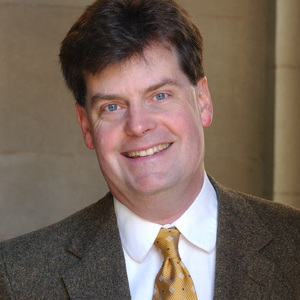
John A. Bargh
- Media Contact
I was born in Champaign, Illinois, and graduated from the home-town University of Illinois in 1977. From there it was on to graduate school in social psychology at the University of Michigan, where my advisor was Robert Zajonc. I received my PhD in 1981 and that fall moved to NYU as an assistant professor. After 22 years at NYU, I moved to Yale in 2003. My dissertation received the Society for Experimental Social Psychology (SESP) Dissertation Award in 1982, and in 1989 I received the American Psychological Association (APA) Early Career Award for contributions to psychology. In 1990 Peter Gollwitzer and I received the Annual Research Prize from the Max Planck Society of Germany. In 2001 I received a Guggenheim Fellowship, and also that year was a Fellow at the Center for Advanced Studies in the Behavioral Sciences. In 2007 I received the Donald T. Campbell Award from the Society for Personality and Social Psychology for distinguished contributions to social psychology, and later that year received the Scientific Impact Award from the Society for Experimental Social Psychology.
My lines of research all focus on unconscious mechanisms that underlie social perception, evaluation and preferences, and motivation and goal pursuit in realistic and complex social environments. That each of these basic psychological phenomena occur without the person's intention and awareness, yet have such strong effects on the person's decisions and behavior, has considerable implications for philosophical matters such as free will, and the nature and purpose of consciousness itself.
Primary Interests:
- Evolution and Genetics
- Motivation, Goal Setting
- Self and Identity
- Social Cognition
Research Group or Laboratory:
Note from the Network: The holder of this profile has certified having all necessary rights, licenses, and authorization to post the files listed below. Visitors are welcome to copy or use any files for noncommercial or journalistic purposes provided they credit the profile holder and cite this page as the source.
Image Gallery

Video Gallery

Before You Know It: The Unconscious Reasons We Do What We Do
Select video to watch
-
53:39 Before You Know It: The Unconscious Reasons We Do What We Do
Length: 53:39
-
21:43 Unconscious Emotion
Length: 21:43
-
1:08:16 The Unconscious Mind
Length: 1:08:16
-
1:16:31 The Unconscious Reason We Do What We Do
Length: 1:16:31
-
27:21 Before We Know It
Length: 27:21
-
56:01 The Neuroscience of Conversations
Length: 56:01
-
6:27 Before You Know It: Unlock Your Unconscious Mind
Length: 6:27
-
4:35 On Priming
Length: 4:35
Additional Videos
Books:
- Bargh, J. A. (2017). Before you know it: The unconscious reasons we do what we do. New York: Touchstone.
- Bargh, J.A. (Ed.). (2007). Social psychology and the unconscious: The automaticity of the higher mental processes. Philadelphia: Psychology Press.
- Hassin, R., Uleman, J. S., & Bargh, J. A. (Eds.). (2004). The new unconscious. New York: Oxford University Press.
- Lee-Chai, A.Y., & Bargh, J.A. (Eds.). (2001). The use and abuse of power. Philadelphia, PA: Psychology Press.
- Morsella, E., Bargh, J. A., & Gollwitzer, P. M. (Eds.). (2009). The Oxford handbook of human action. New York: Oxford University Press.
- Uleman, J. S., & Bargh, J. A. (Eds.). (1989). Unintended thought. New York: Guilford.
Journal Articles:
- Bargh, J. A. (2006). What have we been priming all these years? On the development, mechanisms, and ecology of nonconscious social behavior. European Journal of Social Psychology, 36, 147-168. ["Agenda 2006" featured article]
- Bargh, J. A. (2021). All aboard! "Social" and nonsocial priming are the same thing. Psychological Inquiry 32, 29-34.
- Bargh, J. A., & Chartrand, T. L. (1999). The unbearable automaticity of being. American Psychologist, 54, 462-479.
- Bargh, J. A., & Morsella, E. (2008). The unconscious mind. Perspectives on Psychological Science, 3, 73-79.
- Bargh, J. A., Chen, M., & Burrows, L. (1996). Automaticity of social behavior: Direct effects of trait construct and stereotype activation on action. Journal of Personality and Social Psychology, 71, 230-244.
- Bargh, J. A., Gollwitzer, P. M., Lee-Chai, A. Y., Barndollar, K., & Troetschel, R. (2001). The automated will: Nonconscious activation and pursuit of behavioral goals. Journal of Personality and Social Psychology, 81, 1014-1027.
- Fitzsimons, G. M., & Bargh, J. A. (2003). Thinking of you: Nonconscious pursuit of interpersonal goals associated with relationship partners. Journal of Personality and Social Psychology, 84, 148-164.
- Gollwitzer, A., Marshall, K., McLoughlin, K., Martel, C., Hoehs, J., & Bargh, J. (2021). Linking self-reported social distancing to real-world behavior during the COVID-19 pandemic. Social and Personality Psychological Science. DOI: 10.1177/19485506211018132
- Harris, J. L., Bargh, J. A., & Brownell, K. D. (2009). Priming effects of television food advertising on eating behavior. Health Psychology, 28, 404-413.
- Huang, J. Y., & Bargh, J. A. (2008). Peak of desire: Activating the mating goal changes life-stage preferences across living kinds. Psychological Science, 19, 573-578.
- Williams, L. E., & Bargh, J. A. (2008). Keeping one's distance: The influence of spatial distance cues on affect and evaluation. Psychological Science, 19, 302-308.
- Williams, L. E., & Bargh, J. A. (2008, 24 October). Experiencing physical warmth promotes interpersonal warmth. Science, 322, 606-607.
- Williams, L. E., Huang, J. Y., & Bargh, J. A. (2009). The scaffolded mind: Higher mental processes are grounded in early experience of the physical world. European Journal of Social Psychology, 39, 1257-1267.
Other Publications:
- Bargh, J. A. (2005). Bypassing the will: Toward demystifying the nonconscious control of social behavior. In R. Hassin, J. Uleman, & J. Bargh (Eds.), The new unconscious (pp. 37-58). New York: Oxford.
- Bargh, J. A. (2008). Free will is un-natural. In J. Baer, J. Kaufman, & R. Baumeister (Eds.), Are we free? The psychology of free will (pp. 128-154). New York: Oxford University Press.
- Bargh, J. A., & Chartrand, T. L. (2000). The mind in the middle: A practical guide to priming and automaticity research. In H. T. Reis & C. M. Judd (Eds.), Handbook of research methods in social and personality psychology. New York: Cambridge University Press.
- Bargh, J. A., & Morsella, E. (2009). Unconscious behavioral guidance systems. In C. Agnew et al., Then a miracle occurs: Focusing on behavior in social psychological theory and research. New York: Oxford University Press.
Courses Taught:
- Social Psychology
- The Modern Unconscious
John A. Bargh
Department of Psychology
Yale University
100 College Street
New Haven, Connecticut 06520
United States of America
- Phone: (203) 432-4547

